Leading from Within: Key Takeaways from the Malaysia Leadership Summit 2026 (Part 2)
Read Part 1 here.
Claim your free access to the Malaysia Leadership Summit 2026 talks →
The afternoon sessions of the Malaysia Leadership Summit 2026 shifted the spotlight from macro organisational frameworks to the everyday mechanics of self-leadership. As the landscape grows increasingly volatile and automated, the challenge for modern executives is essentially about learning how to manage yourself before you attempt to manage others.
Through an engaging mix of historical storytelling, psychological deep dives, and highly vulnerable live case studies, the afternoon presenters dismantled the myth of the hyper-polished corporate leader. Here are the standout takeaways and actionable highlights from the afternoon sessions.
1. Automating Admin to Bridge the Leadership Gap
Mattie Pujol | Chief Community and Partnerships Manager at brioHR
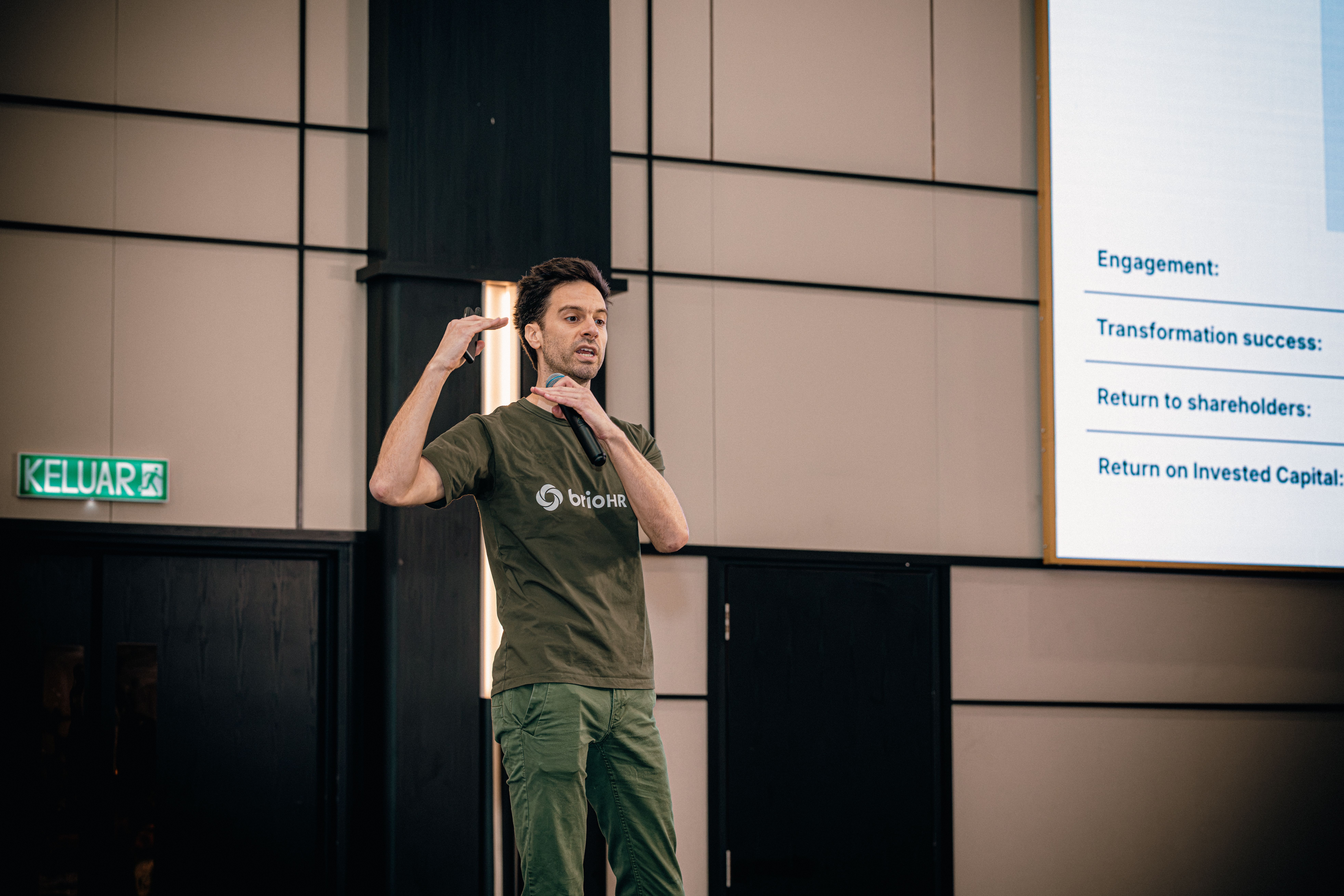
Mattie Pujol
Stepping onto the stage on short notice for his co-founder, Mattie used the moment to demonstrate that the basis of true organisational trust is vulnerability. Pulling from his background at Google and previous failures trying to roll out OKRs (Objectives and Key Results) via spreadsheets, Mattie tackled why most companies fail to connect their high-level vision to the front lines.
A broken middle happens when high-level corporate values never reach the frontline workers. To bridge that gap, you need consistent, documented feedback loops—not just once a year, but every single week.
He highlighted that the average HR team spends 73% of their time trapped in pure administrative busywork—copying data from one program to another. This creates a "broken middle" where strategic mission and workforce execution never meet. To fix this, Mattie introduced a highly practical approach to performance tracking:
- Automate payroll, leave, and claims through a dedicated platform to immediately reclaim the 73% of time HR teams waste on repetitive data entry.
- Record your weekly one-to-one check-ins using AI transcription apps like Fireflies or Granola to completely eliminate manual note-taking.
- Feed a quarter's worth of meeting transcripts into an AI tool to instantly generate objective, bias-free quarterly performance summaries.
- Replace fragile tracking spreadsheets with an automated OKR system that prompts managers for consistent updates without HR having to chase them.
- Shift the focus of your weekly syncs away from daily project fires and dedicate that time strictly to measuring progress against long-term strategic goals.
With employee engagement hovering around 26% in Southeast Asia, Mattie reminded the audience that you cannot successfully roll out massive corporate transformations if your team is structurally disengaged. The tools to bridge this gap have existed since the 1980s, but the reason to implement them now is that AI finally makes the documentation effortless.
2. Success is Measured By the Value You Create
Ibrahim Sani | Former CEO of Yayasan Peneraju
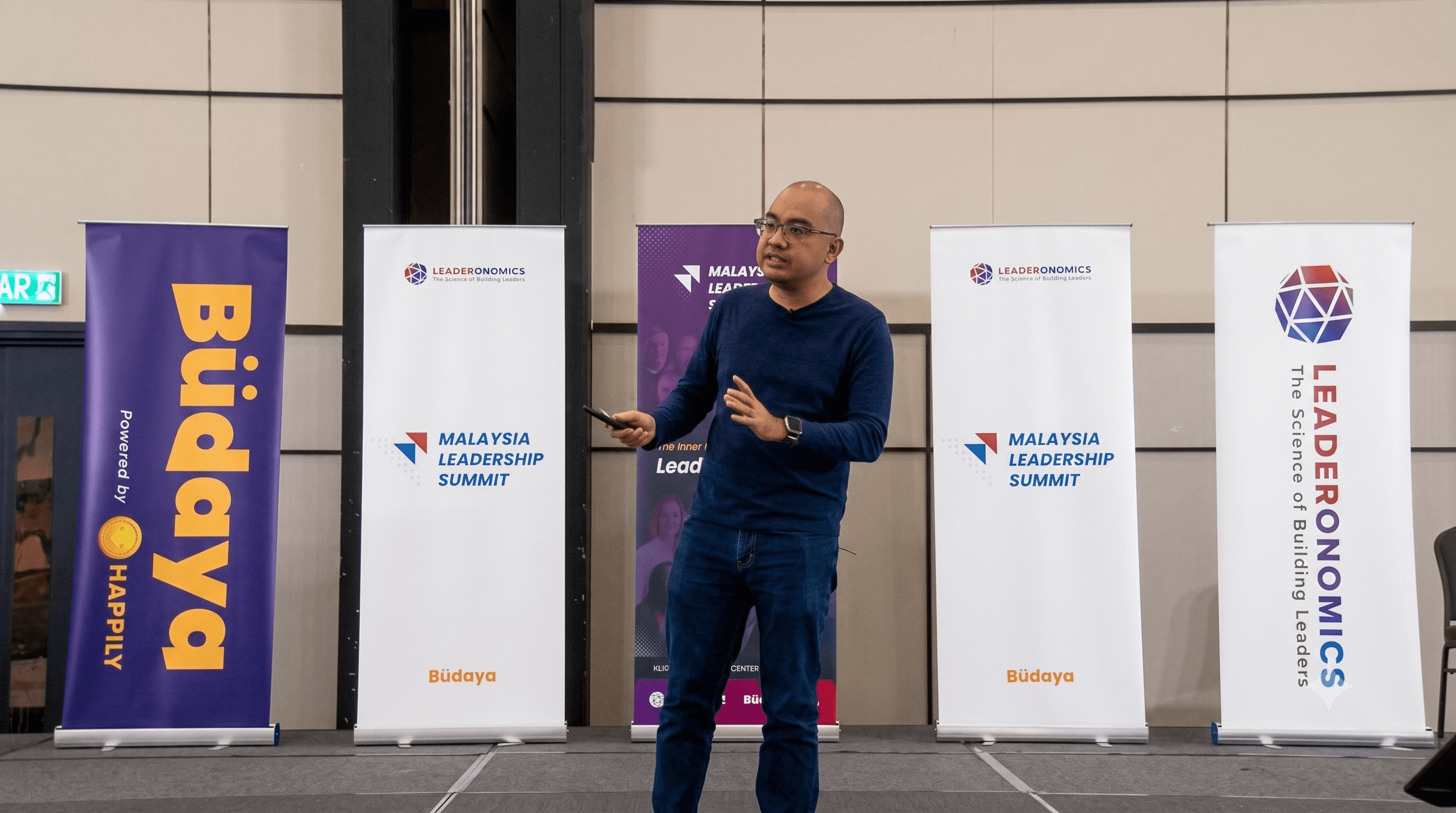
Ibrahim Sani
Ibrahim Sani challenged the audience to rethink one of the most common measures of success. Rather than asking how much we earn or achieve, he encouraged leaders to ask a different question: What value am I creating for the people around me?
Today, it doesn't matter how much you make. It matters more how much value you create.
Ibrahim believes every leader has a responsibility to create opportunities for others to grow. That can be as simple as sharing knowledge, mentoring a colleague or helping someone unlock strengths they may not yet recognise.
This philosophy has become the driving force behind Yayasan Peneraju's leadership development approach. Rather than focusing solely on producing skilled professionals, the organisation now identifies and develops individuals who have the potential to become value creators within their industries and communities.
3. Making Space to Think
Dr. Goh Chee Leong | CEO of HELP University
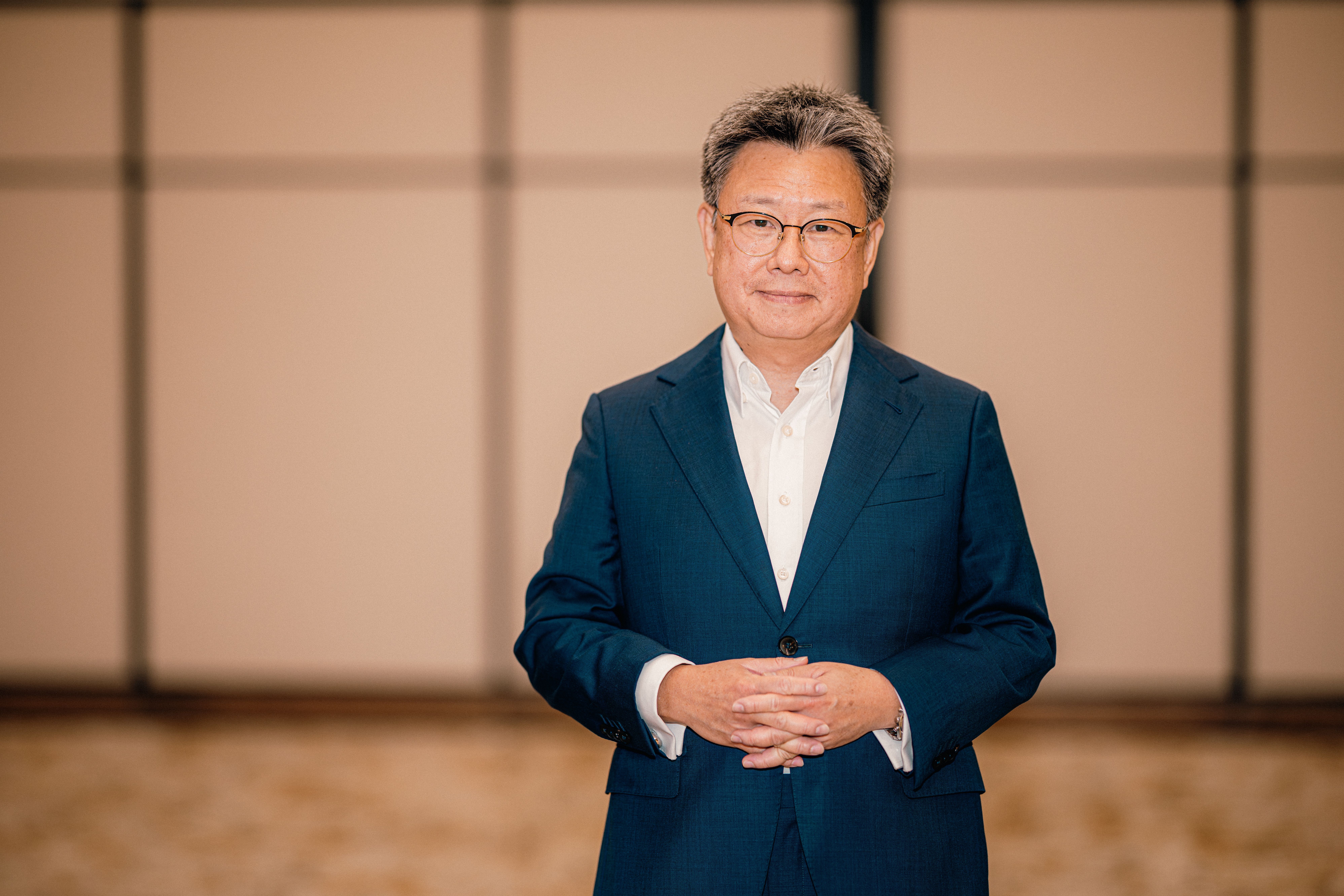
Dr. Goh Chee Leong
After nearly three decades of coaching leaders, Dr. Goh Chee Leong discovered that most leaders need more time to think.
Throughout his career, Dr. Goh has led leadership reflection retreats where executives step away from the demands of daily work. He emphasised that this practice must be done entirely alone, free from coaches, books, or other external influences. By setting aside a day or two away from the operational grind, leaders create the space to fulfil one of their most important responsibilities: providing clear direction, making sound strategic decisions and living with greater purpose.
Many times, what we need most of all is silence. We need silence, time and space just to think.
4. Finding Your Leadership Compass in a VUCA World
Nur Hamurcu | Managing Director and Co-Founder of &samhoud Asia
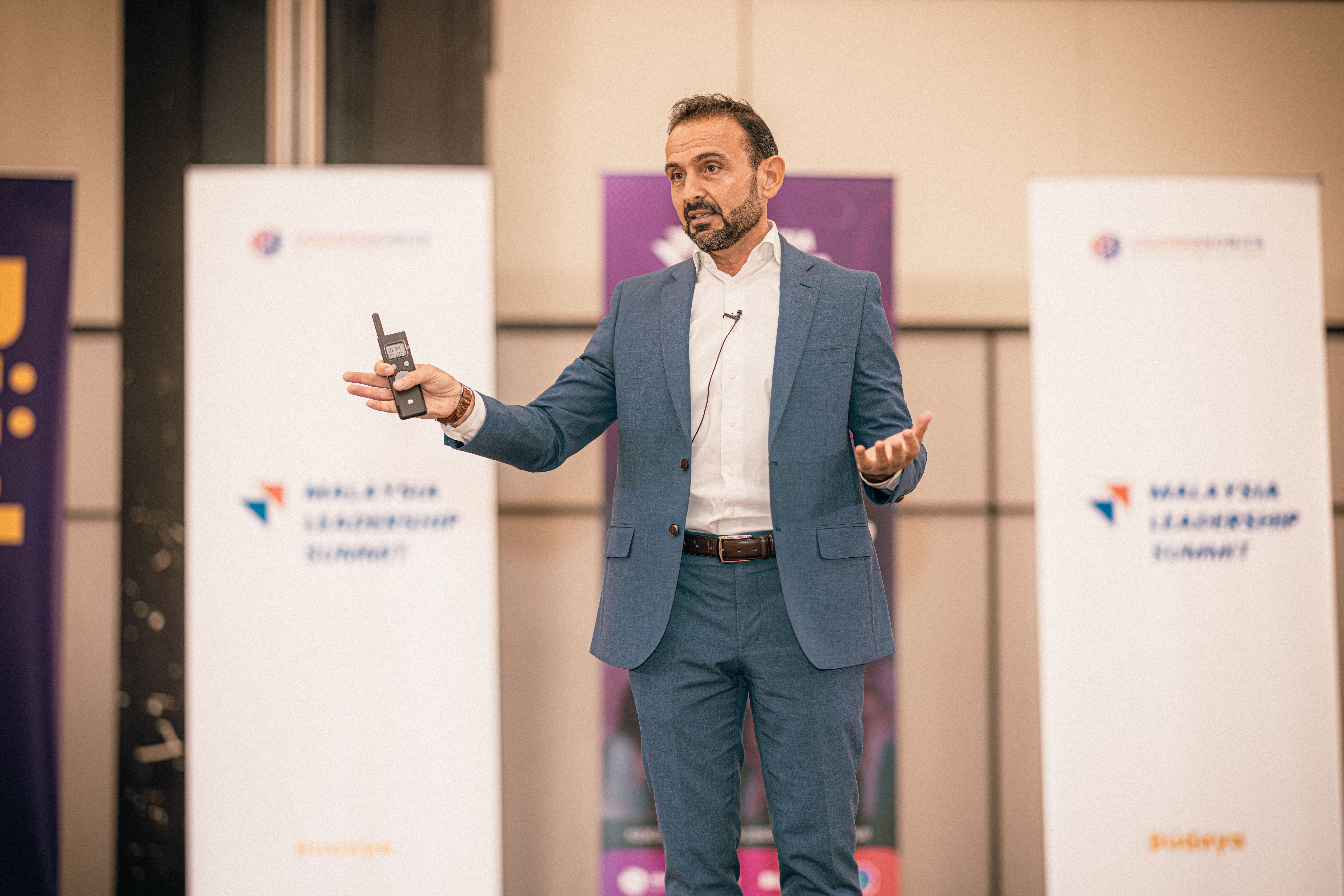
Nur Hamurcu
Nur Hamurcu began his session with a story that has stayed with him for years. During a visit to South Africa, he had the opportunity to speak with former President F.W. de Klerk about the country's transformation and the leadership of Nelson Mandela.
While imprisoned for 27 years, Mandela and his fellow inmates were forced into the mind-numbing task of moving piles of stones across a yard daily. Instead of letting it break them, Mandela used that time to align his men around a shared vision of a healed, post-apartheid South Africa.
That message became especially relevant in today's increasingly volatile world. While organisations once relied on roadmaps, Nur argued that leaders now need something different.
We can't stick to maps anymore. We need to find our compass.
Unlike a map, which becomes outdated as the landscape changes, a compass always points towards the true north. At its core are two enduring anchors:
- Purpose: Why am I here? What meaningful contribution am I uniquely placed to make?
- Core Values: Which principles are truly non-negotiable, even under pressure?
Surrounding these are the more dynamic elements that evolve over time:
- Vision: What does success look like over the next few years?
- Core Qualities: What strengths make me uniquely effective as a leader?
Essentially, strategies and plans will inevitably change. A leader's purpose and values should not. The strongest leaders are not defined by how accurately they predict the future, but by how consistently they stay anchored to who they are while navigating it.
5. The Most Important Conversation Starts Within
Dr. Damini Chawla | Global Communication Coach, Human Connection Expert, Keynote Speaker and Author
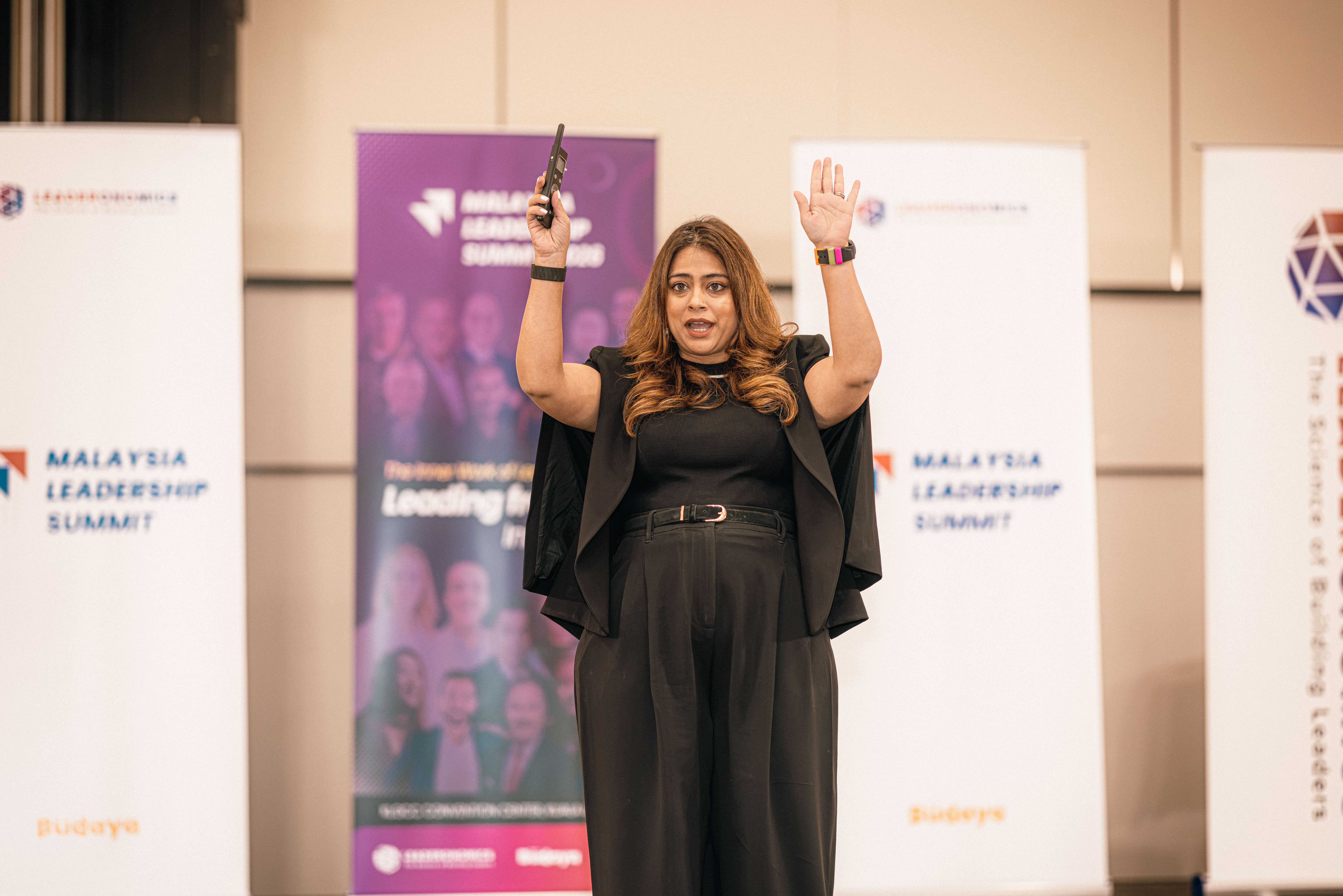
Dr. Damini Chawla
Communication is often viewed as something that happens between people. Dr. Damini Chawla challenged that assumption by arguing that every conversation first begins within ourselves.
Sharing her own experience of moving from Australia to Singapore as a newly qualified dentist, Dr. Damini recalled how confident she felt in her communication skills—until she realised that what had worked in one culture was failing in another.
Once, a taxi driver mentioned that she was "too nice" and spent too much time talking. His candid remark forced Dr. Damini to confront a difficult truth about effective communication.
Effective communication is not about saying more, but about understanding how others experience us.
To make this practical, Dr. Damini introduced her HUMAN Framework, a simple model for improving both self-awareness and interpersonal communication.
- H – Hearing: Listen to understand rather than simply preparing your next response.
- U – Understanding: Seek context before making assumptions.
- M – Moderating: Recognise your emotional triggers before reacting.
- A – Authenticity: Lead consistently from your values rather than adapting your character to different audiences.
- N – Needs: Identify and communicate your own needs instead of expecting others to guess them.
Dr. Damini also challenged common misconceptions about authenticity. Being authentic, she explained, is not saying whatever comes to mind or using honesty as an excuse for poor behaviour. Instead, authenticity means remaining guided by the same values whether speaking to a colleague, a client, a team or family members.
6. Leading Through Change with Courage, Empathy and Adaptability
Jonathan Low | CEO of Global Success Learning, Global Speaking Fellow, Leadership Keynote Speaker
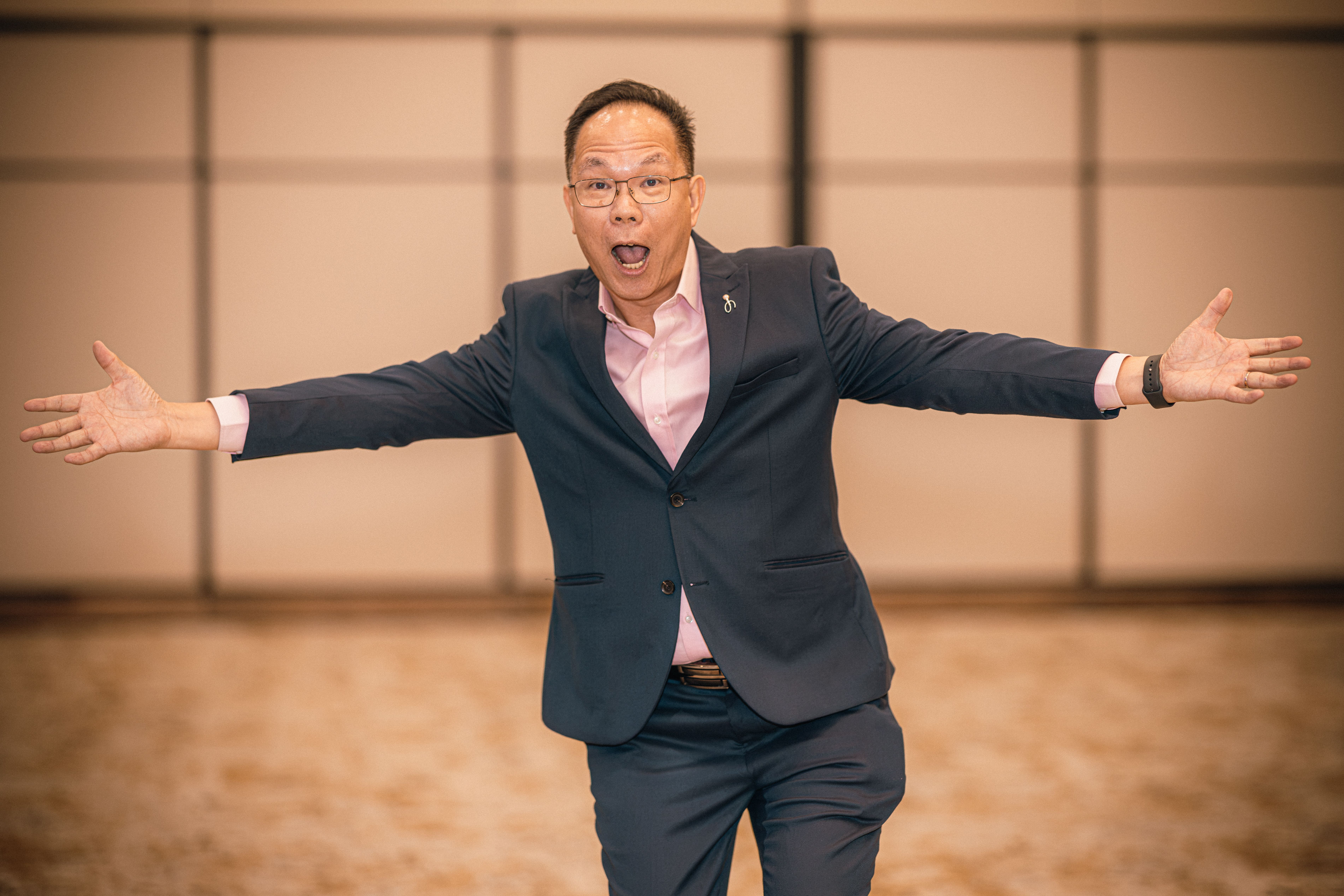
Jonathan Low
Jonathan Low compared leadership to riding a rollercoaster.
He described the familiar emotions leaders encounter during periods of disruption: anticipation, uncertainty, and moments when everything seems to move in the opposite direction. Leadership, he suggested, rarely follows a predictable path.
The analogy served as a fitting backdrop for today's AI-driven workplace, where rapid technological change continues to reshape industries. Yet, according to Jonathan, technology itself is not the greatest challenge facing organisations.
Drawing from a global survey of more than 300 professionals, he found that the biggest barriers to embracing AI were deeply human: fear of failure, resistance to change and organisational culture. Technical knowledge mattered, but mindset mattered even more.
The AI problem is really a people problem in disguise.
To help leaders navigate this reality, Low introduced the CHA Framework, built around three capabilities that technology cannot replace:
- Courage: Having the confidence to step forward despite uncertainty.
- Human Empathy: Building trust by understanding the people behind the work.
- Adaptability: Remaining flexible as circumstances continue to evolve.
Rather than treating AI as something to fear, Jonathan encouraged leaders to see it as an opportunity to focus on what humans do best. If technology can automate repetitive work, the time it creates should be invested in stronger relationships, better conversations and more intentional leadership.
7. Why Humour Might Be a Leader's Most Underrated Tool
Scott Friedman | Founder of Together We Change The World
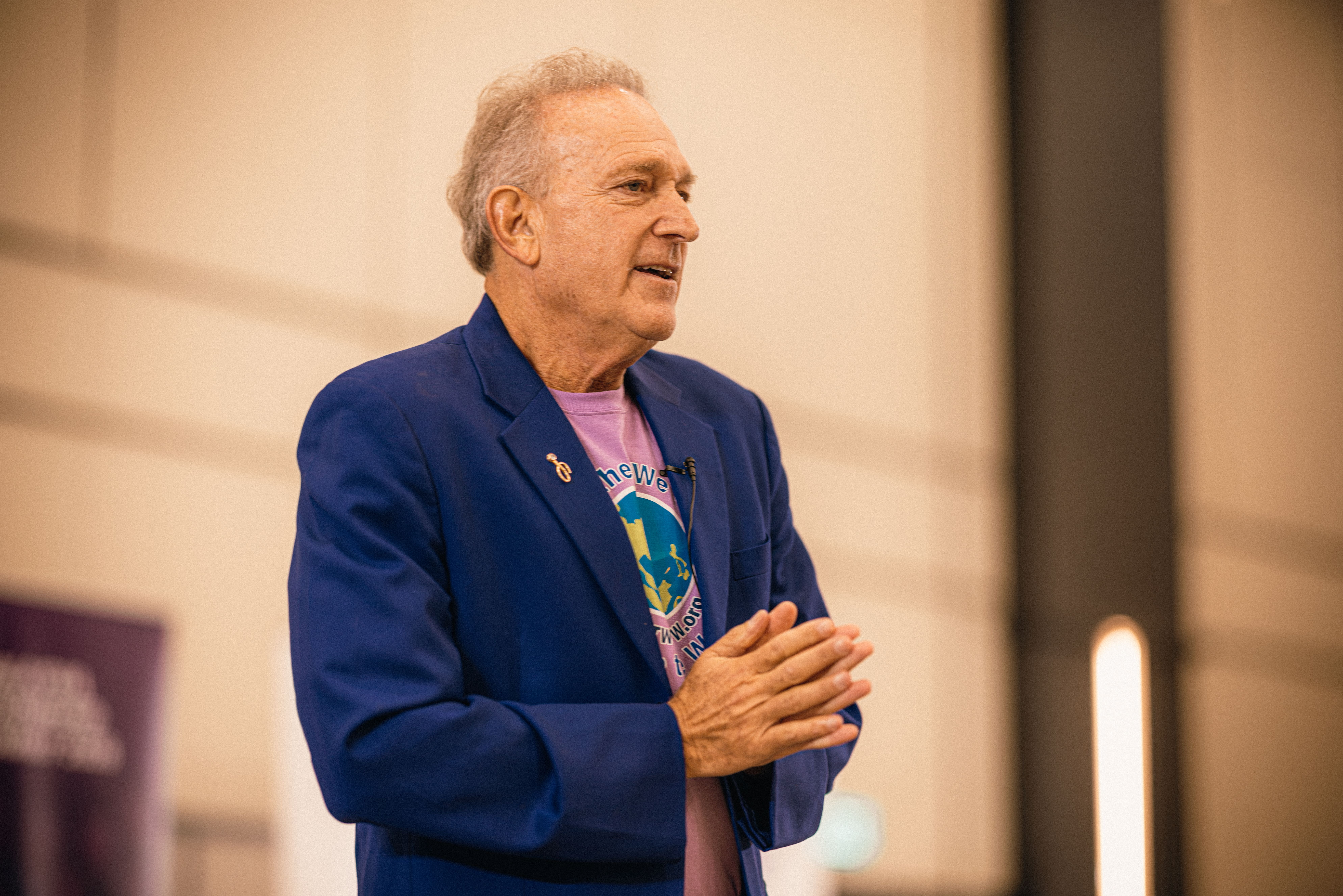
Scott Friedman
After a day filled with discussions on uncertainty and leadership, Scott Friedman closed the summit by bringing laughter to the conversation.
Far from treating humour as entertainment, Scott argued that it is one of the most effective ways leaders can create psychologically safe workplaces.
Humour, he explained, shortens the distance between people. It eases tension, reduces friction and creates the trust that teams need to collaborate effectively.
But this does not mean becoming an office comedian.
Throughout his session, Scott demonstrated how even small moments of playfulness can reframe stressful situations. Whether singing complaints instead of dwelling on them or preparing light-hearted responses to everyday mishaps, he encouraged leaders to approach challenges with greater perspective.
Those who laugh, last.
Leaders who can acknowledge their own imperfections create environments where others feel comfortable doing the same.
Friedman concluded by reminding the audience that leadership is ultimately about relationships. Drawing on his long partnership with Leaderonomics and Together We Can Change the World, he reflected that success is measured not only by what we achieve, but by how we lift others along the way.
Looking Ahead
Looking back at the entire day, the collective advice from the speakers boils down to three straightforward principles for real-world leadership:
First, your character is your strategy. When an unexpected crisis detonates, you do not magically rise to your strategic plans. The ultimate competitive edge is having non-negotiable values that remain completely unwavering under pressure.
Second, the human dynamic is non-negotiable. As technology systematically automates administrative busywork, the role of a leader shifts entirely to what machines cannot replicate. Success now requires fiercely protecting human trust, engineering psychological safety, and mastering the internal calm needed to guide teams through change.
Lastly, step out of constant busyness to find direction: Moving from reactive management to purposeful execution requires stepping out of workplace busyness. Leaders cannot think clearly if they are constantly stuck in back-to-back meetings, which is why true strategic direction only comes when individuals take time alone to check on their health, their people, and their goals.
Ultimately, the Malaysia Leadership Summit 2026 served as a practical reminder that long-term success requires a balance of sharp external foresight and strong internal grounding. Navigating a changing landscape means leaders must stay highly alert to market shifts, technological disruptions, and emerging trends. But as you execute those forward-looking strategies, the tools and frameworks are only as good as the people behind them. The leaders who succeed tomorrow will be those who can accurately read where the world is going, while staying firmly anchored to their core values and deeply connected to their teams as they make the leap.
Listen to the official Malaysia Leadership Summit 2026 theme song:



Leadership
Tags: Leadership & Development (L & D), Be A Leader, Transformation & Change, Artificial Intelligence

Anggie is the English editor at Leaderonomics, where creating content is an integral part of her daily work. She is never without her trusty companion: a steaming cup of green tea or iced latte.